

Developing Breakthrough Therapies for Mucin-Related Diseases
Mucpharm is an Australian biotechnology company developing innovative therapies for cancers and diseases driven by mucin, glycoproteins, and pathogen-associated biofilms.
Founded in 2017 by Professor David Morris and the Herszberg Family, Mucpharm was established to address significant unmet medical needs in rare and difficult-to-treat diseases. Our breakthrough therapy, BromAc®, emerged from clinical and laboratory research into pseudomyxoma peritonei (PMP), a rare appendix cancer characterised by excessive mucin production.
Today, Mucpharm is advancing BromAc® as a novel treatment designed to break down mucin barriers and enhance the effectiveness of existing therapies. Supported by global collaborations, scientific innovation, and strategic partnerships, we are committed to transforming research into life-changing treatments for patients worldwide.
Our Mission
To provide more effective treatment options for patients living with mucin-related diseases.
We are committed to advancing scientific discovery, fostering global collaborations, and developing transformative therapies that improve patient outcomes and quality of life.
Our Vision
A world where patients with mucin-related diseases have access to effective, innovative treatments that deliver better outcomes and improved quality of life.
NEWS & UPDATES
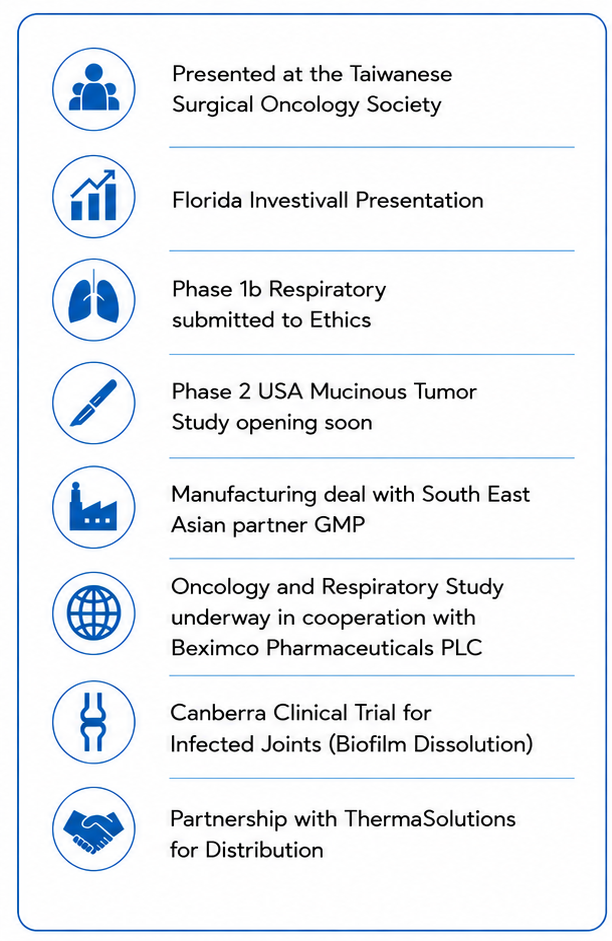
2026 Highlights
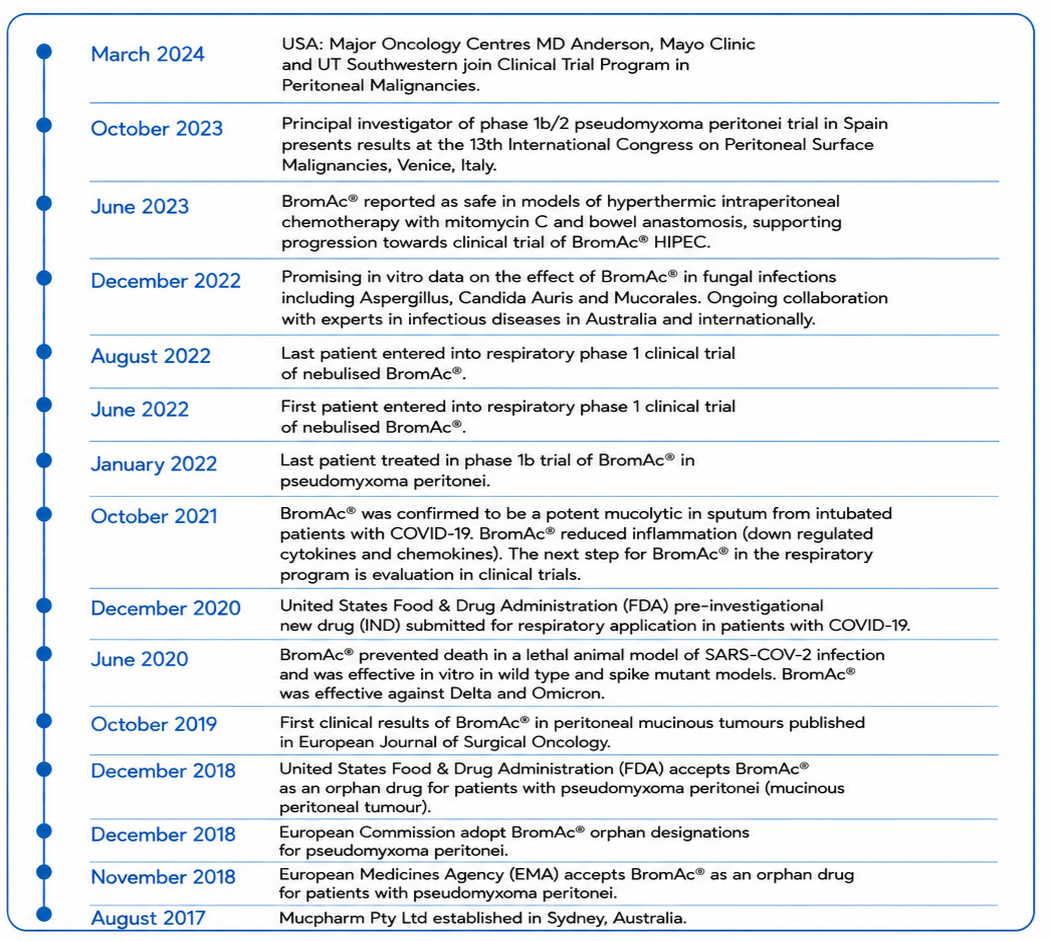
Our Journey
Management Committee
Prof David L Morris CEO, Co-Founder
Myer Herszberg Chairman, Co-Founder
Sarah Valle Clinical & Regulatory
Mark Lawrence Director
Steven Davis
Board Advisor- US and EU
Mucpharm’s Scientific Advisory Team includes experts in surgical and medical oncology, intensive care, infectious diseases, respiratory physicians and consultants with preclinical and clinical pharmaceutical development backgrounds.
Program Scientists
Dr Javed Akhter, Laboratory Manager, Cell Biologist
Dr Ahmed Mekkawy, Pre-Clinical Research and Immunology
Dr Krishna Pillai, Organic Chemist, Pharmacologist
Dr Mathew Eapen, Respiratory Pre-Clinical Research Dr Khalilur Rahman, Preclinical Research Scientist Anant Solanki, Analytical Research and Development Fany Octavia, R&D Pharmacist Nicole Valle, Quality Assurance and Compliance Maria Ali, Research and Quality Analyst Samina Badar, Research Assistant
Mucpharm collaborates with several scientific teams in Australia, the United States, Brazil and Europe to develop the clinical and preclinical programs in infectious diseases and oncology.
What Is BromAc®
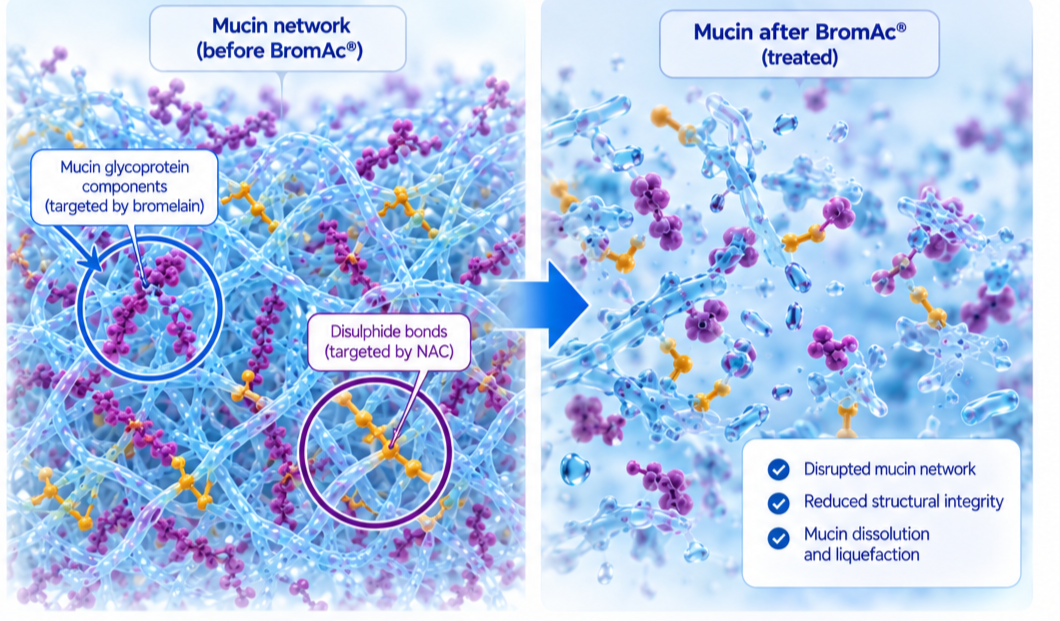
designed to disrupt the molecular framework that gives mucin its structure and cohesion. Bromelain-derived proteases and NAC act on complementary components of the mucin network, weakening its structural integrity and promoting mucin dissolution and liquefaction.
This dual-action approach formed the foundation for BromAc®'s development as a mucin-directed therapy, initially for mucinous peritoneal tumours and subsequently for other diseases in which pathological mucin or glycoprotein barriers may contribute to treatment difficulty.
BromAc® is a novel, patented mucin-directed biologic developed by Mucpharm. Its development originated from a clinical challenge in pseudomyxoma peritonei (PMP), where tumour-produced mucin can accumulate as thick, gelatinous deposits around tumour cells. Researchers sought to identify a way to directly break down this mucin barrier and screened more than 150 compounds before discovering that bromelain and N-acetylcysteine (NAC) produced a markedly greater mucolytic effect when used together.
BromAc® combines a pharmaceutical-grade, modified, purified and fractionated bromelain-derived protease preparation with N-acetylcysteine (NAC). Rather than simply thinning mucus, BromAc® is
BromAc® in Oncology
Clinical Development
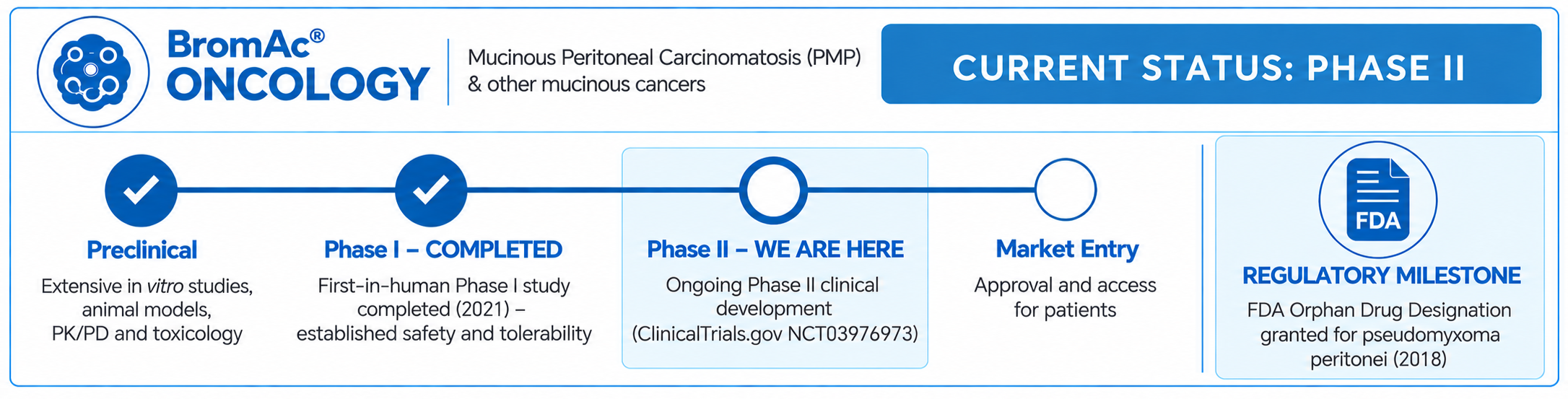
BromAc® has progressed from extensive laboratory and preclinical research into clinical investigation, particularly for pseudomyxoma peritonei (PMP) and other mucinous peritoneal tumours.
First-in-Human Clinical Study
The first-in-human Phase I study evaluated BromAc® in patients with peritoneal mucinous tumours and provided early clinical evidence of mucolytic activity and a manageable safety profile (Valle et al., 2021).
Phase I/II Clinical Trial
A subsequent Phase I/II study evaluated intratumoural BromAc® in patients with recurrent and unresectable pseudomyxoma peritonei. At one month, 6 of 11 treated tumour masses achieved a partial response, while further tumour-volume reductions were observed during longer-term follow-up. These findings provide early clinical evidence of tumour-volume reduction following local BromAc® treatment (Rodríguez-Ortiz et al., 2024).
Emerging 2026 Clinical Evidence
A 2026 single-centre expanded-access program evaluated intratumoural BromAc® in 10 patients with 23 unresectable PMP tumour masses. Among 17 evaluable tumours, 14 demonstrated tumour-volume reduction, with a median reduction of 48.6%. A median of 370 mL of dissolved mucus was aspirated following treatment, demonstrating the potential of BromAc® to reduce and physically remove tumour-associated mucin (Altpeter, et al., 2026).
BromAc® and Chemotherapy
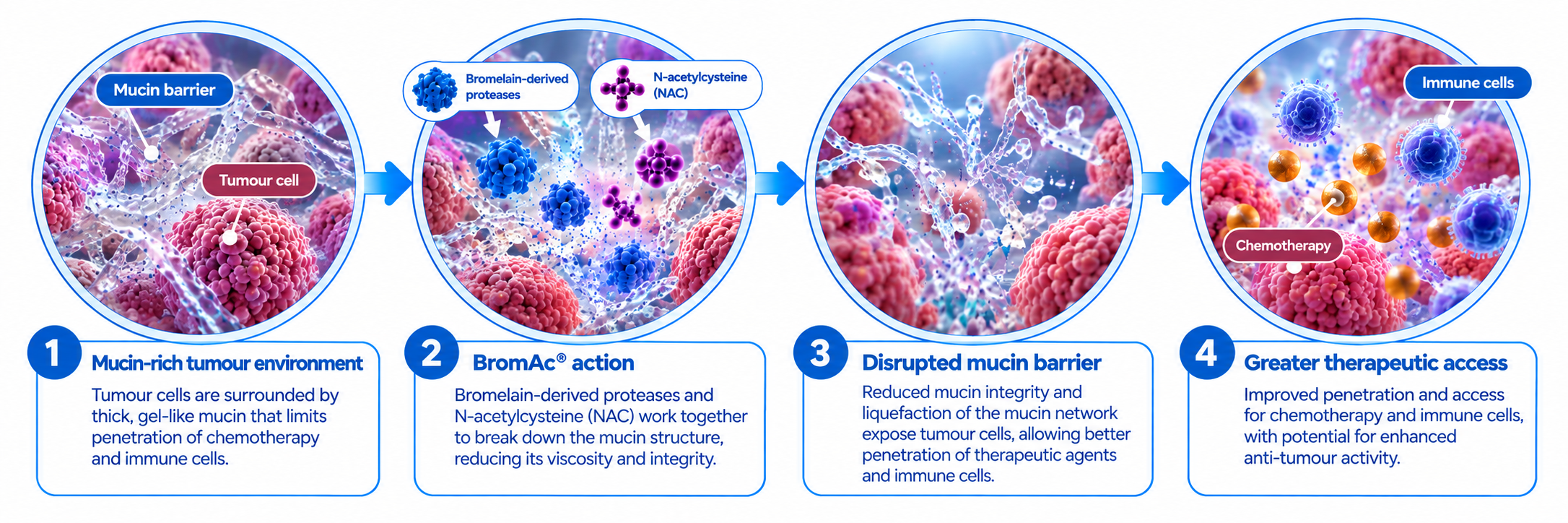
Some cancers produce large amounts of thick mucin, which can create a barrier around tumour cells and make it harder for chemotherapy to reach them. In preclinical models of appendiceal cancer, BromAc® treatment reduced mucin (Wajih et al., 2024) and enhanced the effects of chemotherapy used in HIPEC (Pillai et al., 2020).
Mucin is an important component of the tumour microenvironment in many mucin-producing cancers. Gastrointestinal tumours can overexpress mucins, which are associated with tumour progression, metastasis, treatment resistance, and the formation of a dense extracellular environment around tumour cells.
BromAc® is being developed to disrupt the mucin-rich environment surrounding tumour deposits, with the potential to reduce the physical barrier to locally administered therapies.
Respiratory Safety and Human Investigation
The respiratory development program has progressed from preclinical studies to human investigation.
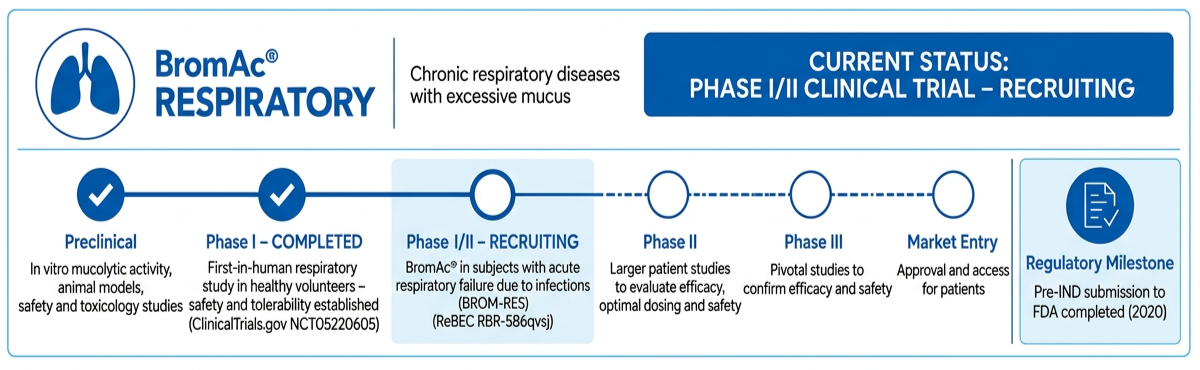
Nebulised BromAc® was evaluated in a Phase 1 clinical study involving 12 healthy volunteers, designed to assess the safety and tolerability of respiratory administration across escalating doses. The study was conducted at St George Hospital in Australia and was completed in 2022 (ClinicalTrials.gov).
Preclinical inhalational safety research has subsequently been extended. A 2026 study evaluated repeated nebulised BromAc® administration over 28 days in mice. No treatment-related effects on general health, behaviour or body weight were observed, and no respiratory distress, haemorrhage or hypoxia were reported (Mekkawy et al., 2026).
Clinical Development
Mucpharm is advancing BromAc® as an investigational therapy for respiratory conditions in which pathological mucus contributes to airway obstruction and impaired respiratory function.
Respiratory infection — Phase I/II
A Phase I/II clinical study of nebulised BromAc® in community-acquired pneumonia (CAP) is registered in Brazil. The study is evaluating safety and efficacy in adults with severe pneumonia requiring mechanical ventilation and significant mucus production (ReBEC).
Mucpharm is also investigating potential applications in chronic mucus-associated respiratory diseases, including COPD and bronchiectasis, where impaired mucus clearance and airway obstruction are important components of disease.
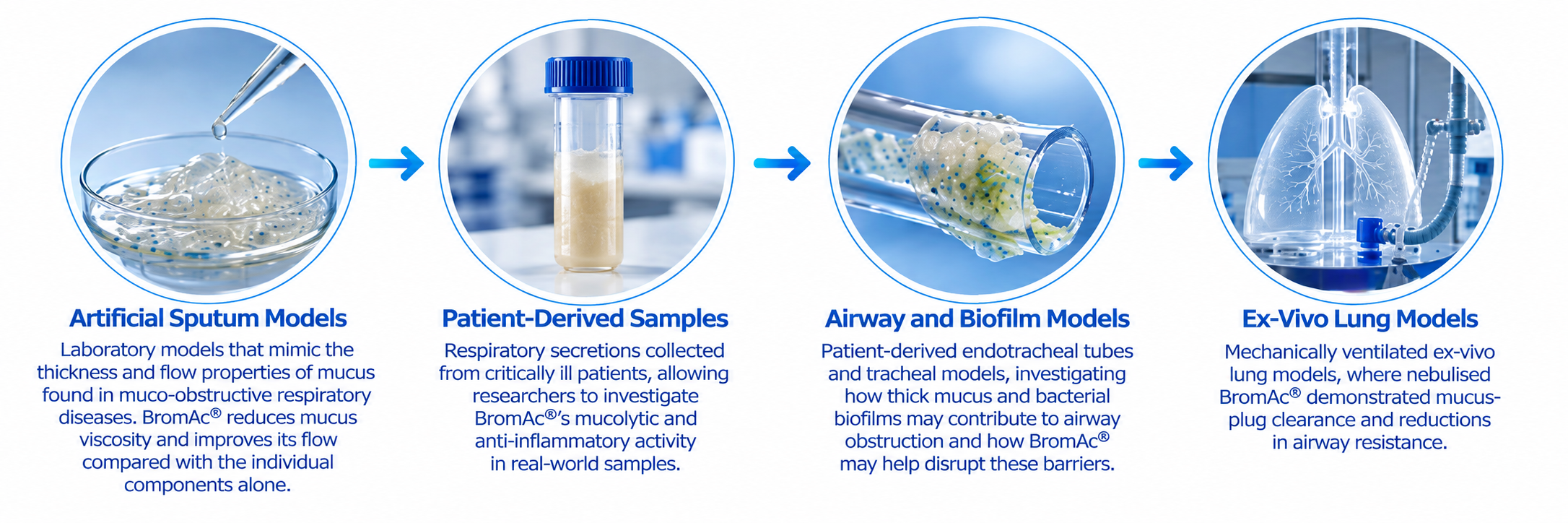
Mucus is an important part of the lungs’ natural defence system. It traps dust, particles and germs, which are normally removed by coughing and breathing. In respiratory disease, mucus can become thick, sticky and difficult to clear. This can cause mucus to build up and block the airways, making it harder to breathe and increasing the risk of inflammation, infection and lung damage.
Thick, excessive mucus is common in conditions such as COPD, bronchiectasis, cystic fibrosis and primary ciliary dyskinesia (PCD). Mucus can also block the airways in asthma, although the underlying causes are different.
Even with existing treatments, this mucus can remain a significant challenge. BromAc® is being investigated for its ability to break down and thin pathological mucus, helping it flow more easily.
BromAc® in Respiratory Diseases
BromAc® in Infections
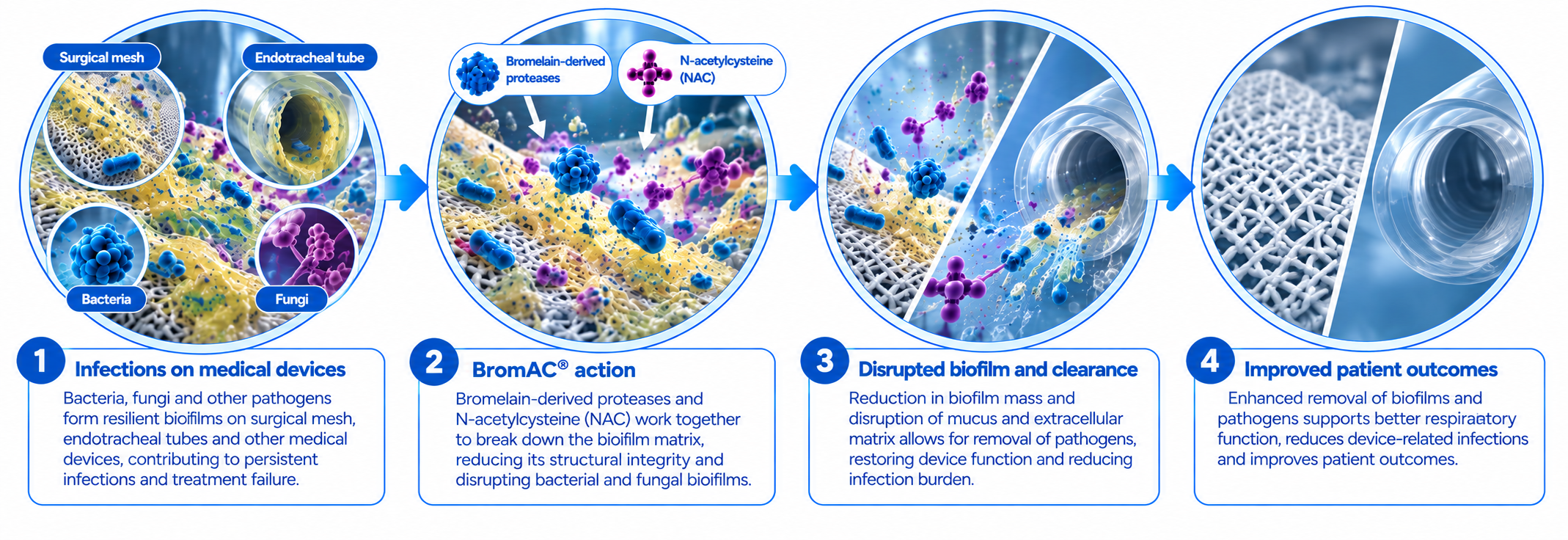
Biofilms are protective communities of microorganisms, such as bacteria and fungi, that attach to surfaces and surround themselves with a sticky protective layer. This layer can make the microorganisms harder for the body’s immune system and antimicrobial medications to reach. Biofilms can form on medical devices, implants and other surfaces, contributing to infections that can be difficult to treat.
Fungal infections occur when disease-causing fungi grow in or on the body. While many fungal infections are mild, some can become serious or life-threatening, particularly in people with weakened immune systems. Some fungi are also becoming resistant to antifungal medicines, making certain infections increasingly difficult to treat. Invasive fungal infections can be particularly difficult to treat because of antifungal resistance and the limited number of available treatment options. Mucorales, Aspergillus and Candida are among the fungi that can cause serious infections, particularly in people with weakened immune systems.
Clinical Development
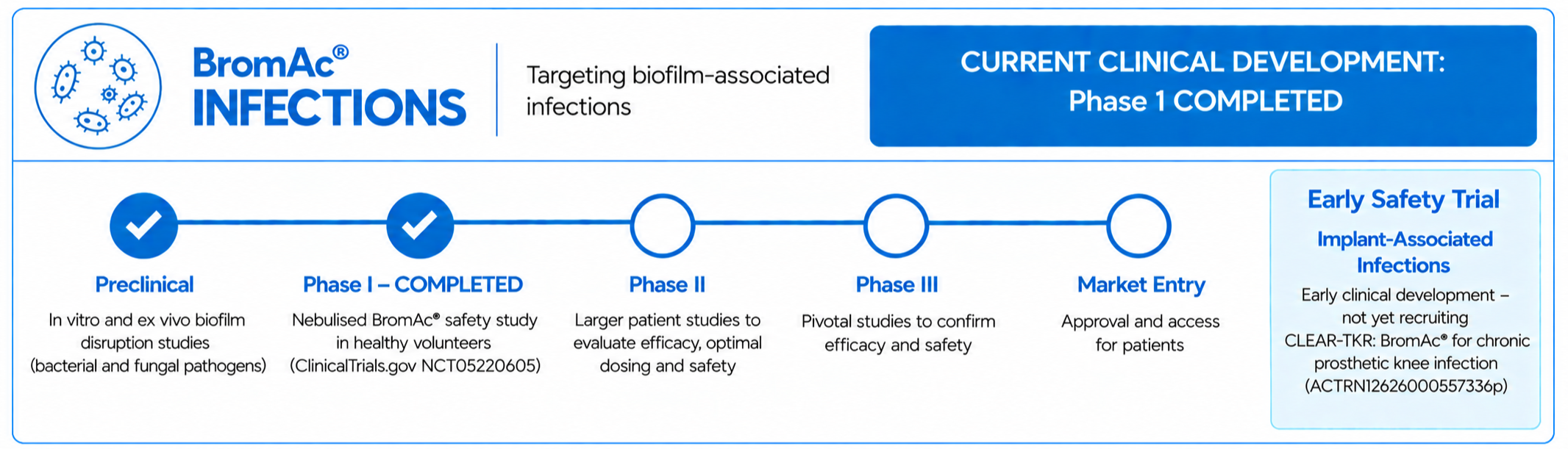
Public clinical-trial registries indicate that BromAc® has progressed into clinical investigation for infectious respiratory disease.
Prosthetic joint infection — early clinical development
The Australian CLEAR-TKR study (ACTRN12626000557336p) is investigating intra-articular BromAc® in patients with chronic prosthetic knee infection.
Partnering and Employment Opportunities
Investors & Partnering
Mucpharm is exploring partnering and/or licensing opportunities in the rare disease, respiratory and oncology fields. For more information, please contact us: partner@mucpharm.com
Student and Higher Degree Positions
Mucpharm promotes a continuous learning environment. As part of our ongoing focus on education, we supervise students undertaking Honours, Masters or Doctor of Philosophy research degrees. Please contact our team at info@mucpharm.com if you are interested in progressing your career with us.
Employment Opportunities
We do not have any vacancies at present, however, please check back regularly for future opportunities. We primarily advertise via SEEK.
Patient Enquiries
BromAc® is currently being developed for the treatment of certain advanced abdominal cancers and remains under clinical investigation.
Information about ongoing clinical trials is available at www.clinicaltrials.gov.
If you are a patient seeking information about BromAc®, please speak with your treating doctor or specialist. We are unable to provide individual medical advice. Healthcare professionals can contact our Medical Affairs team at david@mucpharm.com for information about clinical trials, compassionate use or specialist treatment centres in Australia and internationally.
For all other enquiries, please complete the contact form below.
Mekkawy AH, Rahman MK, Breakeit M, Pillai K, Badar S, Akhter J, Dietz M, Barat S, Valle SJ, Morris DL. “Feasibility study of chemotherapeutic efficacy assessment in hyperthermic intraperitoneal chemotherapy (HIPEC)”. Discov Med 3, 95 (2026). https://doi.org/10.1007/s44337-026-00632-6
Parnell B, Morris D. Bromelain and N-acetylcysteine (BromAc) as novel adjunctive therapy for prosthetic joint infection: a narrative review. J Bone Jt Infect. 2026 Jul 28;11(4):441-451. doi: 10.5194/jbji-11-441-2026. PMID: 42569342; PMCID: PMC13449618.
Stewart, G.J., Mekkawy, A.H., Davis, S., Valle, S.J., Morris, D.L. “Direct Injection of BromAc® for Mucinous Peritoneal Carcinomatosis Shows Promise. Demonstration of Benefit with CRS Is Next”, PSOGI World News, 2026 Issue 7 Pages 4.
Mekkawy , A.H., Rahman, M.K., Pillai, K., Badar S., Simic, M., Akhter J., Valle S.J., Morris D.L. Preclinical assessment of inhalational subacute safety of nebulized MP-171 (BromAc®). BMC Pulm Med 2026 Jan 6;26(1):49. doi: 10.1186/s12890-025-04090-1
Guanjun S, Chong W, Pu Z, Lubiao A, Haipeng Z, Ruiqing M, Huafeng S. Research progress in the diagnosis and treatment of pseudomyxoma peritonei. World J Surg Oncol. 2026 Jan 23;24(1):84. doi: 10.1186/s12957-026-04221-w
Altpeter, S., Wach, M.M., Giran, E. Derby, J., Beasley, S., Pingpank, J.F., Ongchin, M., Choudry, H.A. Intra-Tumoral Mucolytic Therapy for Unresectable Pseudomyxoma Peritonei: Results of a Single-Center Expanded Access Program.Ann Surg Oncol (2026). doi: 10.1245/s10434-025-18966-3
Vici, C., Eapen, M., Narang, P., Morris, D.L. The addition of collagenase to BromAc ® for the management of inoperable pseudomyxoma peritonei - in vitro results. Pleura Peritoneum. 2025 Oct 31;10(4):185-192. doi: 10.1515/pp-2025-0026.
Reis EVS, Ferreira LL, Clarindo FA, Marques-Ferreira G, de Oliveira LC, Moraes TFS, de Carvalho LD, da Fonseca FG, Sabino AP, Eapen MS, Teixeira MM, Valle SJ, Morris DL, Coelho-Dos-Reis JGA. Antiviral effect of Bromelain combined with acetylcysteine against SARS-CoV-2 Omicron variant. Sci Rep. 2025 Apr 7;15(1):11882. doi: 10.1038/s41598-025-92242-y.
Mekkawy A.H., Breakeit M., Rahman M.K., Pillai K., Solanki A., Octavia F., Badar S., Akhter J., Valle S.J., Morris D.L. Safety of BromAc® With Mitomycin C During Hyperthermic Intraperitoneal Chemotherapy (HIPEC): A Preclinical Study. Am J Cancer Res 2025;15(3):1213-1223.
Valle N, Eapen MS, Pillai K, Morris R, Akhter J, Mekkawy AH, Morris DL, Valle SJ. Impact of Nebulized BromAc® on Mucus Plug Clearance in a Mechanically Ventilated Ex Vivo Ovine Lung Model of Obstructive Respiratory Conditions.Life. 2024; 14(9):doi: 10.3390/life14091111
Coelho-dos-Reis J; Marques Ferreira G; Reis E; Clarindo F; Lopes-Ribeiro Á; Gomes-de-Pontes L; Carvalho L; Martins-Filho O; Guimaraes da Fonseca F; Teixeira M; Sabino A; Eapen M; Morris D; Valle S, 'Harnessing a potent combination to address a pandemic virus: SARS-CoV-2-specific antiviral and anti-inflammatory activity of BromAc', The Journal of Immunology 2024, 212, pp. 0882_6304 - 0882_6304, doi: 10.4049/jimmunol.212.supp.0882.6304
Wajih, N., Erali, R.A., Forsythe, S.D., Schaaf, C.R., Shen, P., Levine, E.A., Soker, S., Morris, D.L. and Votanopoulos, K.I., Enhancing the Efficacy of HIPEC Through Bromelain: A Preclinical Investigation in Appendiceal Cancer. Ann Surg Oncol. May 4 2024; doi:10.1245/s10434-024-15355-0
Sun, S. L., Sarofim, M., & Morris, D. L. (2024). Transhepatic Bromelain and Acetylcysteine for Treatment of Posterior Gastric Pseudomyxoma Peritonei: A Case Report. Anticancer Research, 44(5), 2239-2241.
Rodriguez-Ortiz L, Vazquez-Borrego MC, Bura FI, et al. Intra-tumoural bromelain and N-acetylcysteine for recurrent and unresectable pseudomyxoma peritonei: phase I/II trial. Br J Surg. Mar 2 2024; 111(3):znae045.
Pillai K, Akhter J, Mekkawy AH, Valle SJ, Morris DL. Development and Validation of Micro-Azocasein Assay for Quantifying Bromelain. Methods and Protocols. 2024; 7(2):25.
Ferreira, G.M., Clarindo, F.A., Ribeiro, Á.L., Gomes-de-Pontes, L., de Carvalho, L.D., Martins-Filho, O.A., ... & Coelho-dos-Reis, J. G.A. 2023. Taming the SARS-CoV-2-mediated proinflammatory response with BromAc®. Frontiers in Immunology, 14, 1308477.
Mekkawy, A.H., Breakeit, M., Pillai, K., Badar, S., Akhter, J., Valle, S.J., Morris, D.L. “Intraperitoneal BromAc® does not interfere with the healing of colon anastomosis” Cancers; 2023; 15(13):3321.
Pillai, K., Mekkawy, A.H., Akhter, J., Valle, S.J., Morris, D.L. “Effect of nebulized BromAc on rheology of artificial sputum: relevance to muco-obstructive respiratory diseases” Adv Respir Med 2023; 91(2), 146-163.
Wen, H.K., Valle, S.J., Morris, D.L. “Bromelain and acetylcysteine (BromAc®): a novel approach to the treatment of mucinous tumours.” Am J Cancer Res; 2023; 13(4), 1522-1532.
Pillai K; Ke K; Mekkawy A; Akhter J; Morris DL, 'Enhancement of treatment efficacy of hepatic tumours using Trans-arterial-chemoembolization', American Journal of Cancer Reaserch 2023, 13, pp. 1623 – 1639
Skalkos E; Chen KL; Wijayawardana R; Morris DL, 'Effective Use of Bromelain and Acetylcysteine (BromAc®) for Treatment of Perigastric Pseudomyxoma Peritonei: A Case Report', Anticancer Research; 2023; 43, pp. 4735 - 4738, doi: 10.21873/anticanres.16670. PMID: 37772592.
Yang J; Glenn D; Lodh S; Valle S; Morris DL, 'Long-Term Treatment of Unresectable Pseudomyxoma Peritonei with Multiple Treatments of Intratumoural Bromelain and Acetylcysteine (BromAc®): A Case Report', Case Reports in Oncology2023, 16, pp. 1551 - 1556, http://dx.doi.org/10.1159/000534202
Dong, L., Ke, K., Badar, S., Mekkawy, A.H., Akhter, J., Pillai, K., Carter, C., Morris, D.L. “A novel method for potentiation of chemotherapy in Soft Tissue Sarcomas with BromAc” Am J Transl Res 2022; 14(5): 2894-2909.
dos Reis, J.G.A.C, Ferreira, G.M., Lourenço, A.A, et al. "Ex-vivo mucolytic and anti-inflammatory activity of BromAc in tracheal aspirates from COVID-19." Biomedicine & Pharmacotherapy (2022): 112753.
Ke, K., Pillai, K., Mekkawy, A.H., Akhter, J., Badar, S., Valle, S.J., Morris, D.L.” Physical and Chemical Factors Affecting the Loading and Release of Bromelain from DC Beads” Am J Trans Res; 2022; 14(10):7135-7146.
Dilly, A.K., Honick, B.D., Frederick, R. et al. “Improved chemosensitivity following mucolytic therapy in patient-derived models of mucinous appendix cancer”. Translational Research, 2021; 229:100-14.
Carter, C.J., Pillai, K., Badar, S., Mekkawy, A.H., Akhter, J., Jefferies, T., Valle, S.J., Morris, D.L. “Dissolution of biofilm secreted by three different strains of Pseudomonas aeruginosa with bromelain, N-acetylcysteine, and their combinations” Applied Sciences. 2021; 11(23):11388.
Mekkawy, A.H., Pillai, K., Suh, H., Badar, S., Akhter, J., Képénékian, V., Ke, K., Valle, S.J., Morris, D.L. “Bromelain and Acetylcysteine (BromAc) alone and in combination with Gemcitabine inhibits subcutaneous deposits of pancreatic cancer after intraperitoneal injection” Am J Trans Res;2021; 13(12): 13524-13539.
Akhter, J., Quéromès, G., Pillai, K., Képénékian, V., Badar, S., Mekkawy, A.H., Frobert, E., Valle, S.J., Morris, D.L. “The Combination of Bromelain and Acetylcysteine (BromAc) Synergistically Inactivates SARS-CoV-2”. Viruses; 2021; 13(3): 425.
Ke K, Pillai K, Mekkawy AH, Akhter J, Badar S, Valle SJ, & Morris DL. The effect of intraperitoneal administration of BromAc on blood parameters: phase 1 study. Discover Oncology. 2021; 12(1).
Badar, S., Azarkan, M., Mekkawy, A. H., Akhter, J., Pillai, K., El Mahyaoui, R., Ke, K., Cavanaugh, L., & Morris, D. L. Comparison of proteolytic, cytotoxic and anticoagulant properties of chromatographically fractionated bromelain to un-fractionated bromelain. Am J Trans Res, 2021; 13(5), 4309–4321.
Lam, A.R, Bazzi, K., Valle, S.J., Morris, D.L. Novel Use of Bromelain and Acetylcysteine (BromAc®) for Pleural Involvement in Pseudomyxoma Peritonei. Case Rep Oncol. 2021; 14(1):628-33.
Carter, C.J., Mekkawy, A.H., Morris, D.L. “Role of human nucleoside transporters in pancreatic cancer and chemoresistance” World J Gastroenterol, 2021; 27(40):6844-6860.
Mekkawy, A.H., Pillai, K., Badar, S., Akhter, J., Ke, K., Valle, S.J., & Morris, D.L. “Addition of bromelain and acetylcysteine to gemcitabine potentiates tumor inhibition in vivo in human colon cancer cell line LS174T”. Am J Cancer Res, 2021; 11(5), 2252–2263.
Valle SJ, Akhter J, Mekkawy AH, Lodh S, Pillai K, Badar S, Glenn D, Power M, Liauw W, Morris DL. “A novel treatment of bromelain and acetylcysteine (BromAc™) in patients with peritoneal mucinous tumours: A phase I first in man study." Eur J Surg Oncol. 2021; 47(1):115-122.
Cheng E, Sarkar A, Valle S, Morris D. “Novel use of bromelain in the management of infected prosthetic surgical mesh after ventral hernia repair”. International Journal of Abdominal Wall and Hernia Surgery. 2020; 3(1).
Pillai, K., Mekkawy, A. H., Akhter, J., Badar, S., Dong, L., Liu, A. I., & Morris, D. L. “Enhancing the potency of chemotherapeutic agents by combination with bromelain and N-acetylcysteine - an in vitro study with pancreatic and hepatic cancer cells.” Am J Trans Res, 2020; 12(11), 7404–7419.
Akhter J; Quéromès G; Pillai K; Kepenekian V; Badar S; Mekkawy A; Frobert E; Valle S; Morris D, 2020, 'The combination of Bromelain and Acetylcysteine (BromAc) synergistically inactivates SARS-CoV-2', , doi: 10.1101/2020.09.07.286906
Wan VHL; Pillai K; Badar S; Akhter J; Morris DL, 'The effect of hyperthermia (42°C) on the anti-tumoral effect of bromelain, N-acetyl cysteine, chemotherapeutic agents and their combinations - an in vitro evaluation', Journal of Peritoneum (and other serosal surfaces), 2018, doi: 10.4081/joper.2018.104
Pillai, K., Akhter, J., Morris, D.L. “Assessment of a novel mucolytic solution for dissolving mucus in pseudomyxoma peritonei: an ex vivo and in vitro study.” Pleura Peritoneum. 2017 Jun 1;2(2):111-117.
Suh, H., Valle, S.J., Morris, D.L. “Targeting MUC16 in Cancer Therapy”. Chemo Open Access, 2017; 6: 235
Suh, H.; Pillai, K.; Morris, D.L. “Mucins in pancreatic cancer: Biological role, implications in carcinogenesis and applications in diagnosis and therapy”. American Journal of Cancer Research, 2017; 7:1372 – 1383
Pillai, K., Akhter, J., Mekkawy, A., Chua T.C., Morris D.L. “Physical and chemical characteristics of mucin secreted by pseudomyxoma peritonei (PMP).” Int J Med Sci. 2017; 14(1):18-28.
Masoumi-Moghaddam, S., Amini, A., and Morris, D.L. “Is mucin a determinant of peritoneal dissemination of gastrointestinal cancer? Analysis of mucin depletion in two preclinical models.” Clin Transl Oncol, 2017. 19(2): p. 261-264.
Amini, A., Masoumi-Moghaddam, S., Ehteda, A., Liauw, W.L., Morris, D.L. “Potentiation of chemotherapeutics by bromelain and N-acetylcysteine: sequential and combination therapy of gastrointestinal cancer cells.” Am J Cancer Res, 2016. 6(2): p. 350-69.
Amini, A., Masoumi-Moghaddam, S., Morris, D.L. “Utility of bromelain and N-acetylcysteine in treatment of peritoneal dissemination of gastrointestinal mucin-producing malignancies”. 2016: Springer.
Amini, A., Masoumi-Moghaddam, S., Morris, D.L. “In vivo assessment of growth-inhibitory and mucin-depleting effects of bromelain and N-acetylcysteine in peritoneal carcinomatosis models”. Annals of Oncology, 2015. 26: p. ii28.
Amini, A., Masoumi-Moghaddam, S., Ehteda, A., Liauw, W.L., Morris, D.L., “Depletion of mucin in mucin-producing human gastrointestinal carcinoma: Results from in vitro and in vivo studies with bromelain and N-acetylcysteine”. Oncotarget, 2015. 6(32): p. 33329-44.
Pillai, K., Pourgholami, M.H., Chua, T.C., Morris D.L. “MUC1 as a potential target in anticancer therapies.” American Journal of Clinical Oncology, 2015. 38(1): p. 108-118.
Amini A., Masoumi-Moghaddam S., Morris D.L. “Pseudomyxoma peritonei: Current chemotherapy and the need for mucin-directed strategies”. Expert Opinion on Orphan Drugs, 2015; 3:183 – 193.
Pillai, K., Pourgholami, M.H., Chua, T.C., Morris, D.L. Prognostic Significance of Ki67 Expression in Malignant Peritoneal Mesothelioma. American Journal of Clinical Oncology: Cancer Clinical Trials, 2015; 38:388 – 394.
Amini A., Masoumi-Moghaddam S., Ehteda, A., Morris D.L. Bromelain and N-acetylcysteine inhibit proliferation and survival of gastrointestinal cancer cells in vitro: significance of combination therapy. J Exp Clin Cancer Res, 2014. 33: p. 92.
Pillai, K., Akhter, J.A., Chua, T.C., Morris, D.L. “A formulation for in situ lysis of mucin secreted in pseudomyxoma peritonei.” Int J Cancer, 2014. 134(2): p. 478-86.
Pillai, K., Ehteda, A., Akhter, J.A., Chua, T.C., Morris, D.L. “Anticancer effect of bromelain with and without cisplatin or 5-FU on malignant peritoneal mesothelioma cells.” Anticancer Drugs, 2014. 25(2): p. 150-60.
Mekkawy, A.H., Pourgholami, M., Morris D.L. “Involvement of Urokinase-Type Plasminogen Activator System in Cancer: An Overview.” Medicinal Research Reviews, 2014; 34:918 – 956
Akhter, J.A., Pillai, K., Chua, T.C., Alzahrani, N., Morris, D.L. “Efficacy of a novel mucolytic agent on pseudomyxoma peritonei mucin, with potential for treatment through peritoneal catheters”. American Journal of Cancer Research, 2014; 4:495 – 507
Amini, A., Masoumi-Moghaddam, S., Morris, D.L. “Bromelain and N-acetylcysteine induce cytotoxic effects and reduce the expression of mucin in mucin-producing carcinoma cell lines of gastrointestinal origin”. European Journal of Cancer, 2014; 50:S43 – S43.
Pillai, K., Ehteda, A., Akhter, J., Chua, T.C., Morris, D.L. “Anticancer Effect of Bromelain Alone and In Combination with Cisplatin or Fluorouracil on Malignant Peritoneal Mesothelioma Cells”. European Journal Of Cancer, 2014; 50:E66.
Amini, A., Masoumi-Moghaddam, S., Ehteda, A., Morris, D.L. “Secreted mucins in pseudomyxoma peritonei: Pathophysiological significance and potential therapeutic prospects.” Orphanet Journal of Rare Diseases, 2014; vol. 9.
Amini, A., Masoumi-Moghaddam, S., Morris, D.L. “Bromelain and N-acetylcysteine induce cytotoxic effects and reduce the expression of mucin in mucin-producing carcinoma cell lines of gastrointestinal origin”. European Journal of Cancer, 2014; 50: S43.
Amini, A., Ehteda, A., Masoumi Moghaddam S., Akhter, J., Pillai, K., Morris, D.L. “Cytotoxic effects of bromelain in human gastrointestinal carcinoma cell lines (MKN45, KATO-III, HT29-5F12, and HT29-5M21)”. Onco Targets Ther. 2013; 6:403-9.
Pillai, K., Ehteda, A., Akhter, J. Morris, D.L., “Anti-Tumour and Chemosensitising Effect of a Combination of Bromelain and N-Acetyl Cysteine with Cisplatin or 5-FU on Malignant Peritoneal Mesothelioma Cells.” J Glycobiol S, 2013. 1:p2.
Pillai, K., Akhter, J., Chua, T.C., Morris, D.L. “Anticancer property of bromelain with therapeutic potential in malignant peritoneal mesothelioma.” Cancer Invest, 2013. 31(4): p. 241-50.
Amini, A., Masoumi Moghaddam, S., Ehteda, A., Morris, D.L. “Pseudomyxoma peritonei: Uninvited goblet cells, ectopic MUC2.” 2013; Journal of Glycobiology, S1:002.
Pillai, K., Akhter, J., Chua, T.C., Morris, D.L. “Potential mucolytic agents for mucinous ascites from pseudomyxoma peritonei”. Invest New Drugs, 2012. 30(5): p. 2080-6.